Natural salicylates from willow bark are multifunctional skincare actives known for supporting clearer, smoother, and more balanced skin through several biological pathways at once. Unlike aggressive exfoliating acids that focus mainly on rapid surface peeling, natural salicylates help support controlled cell renewal, pore clarity, inflammatory balance, antioxidant protection, and microbiome stability simultaneously.
This makes them especially relevant for modern skin concerns such as dullness, congestion, enlarged pores, blemishes, sensitivity, and early signs of aging. Today, skin is often overstimulated by active-heavy routines, environmental stress, and barrier disruption. In this context, exfoliation should be about better biological alignment.
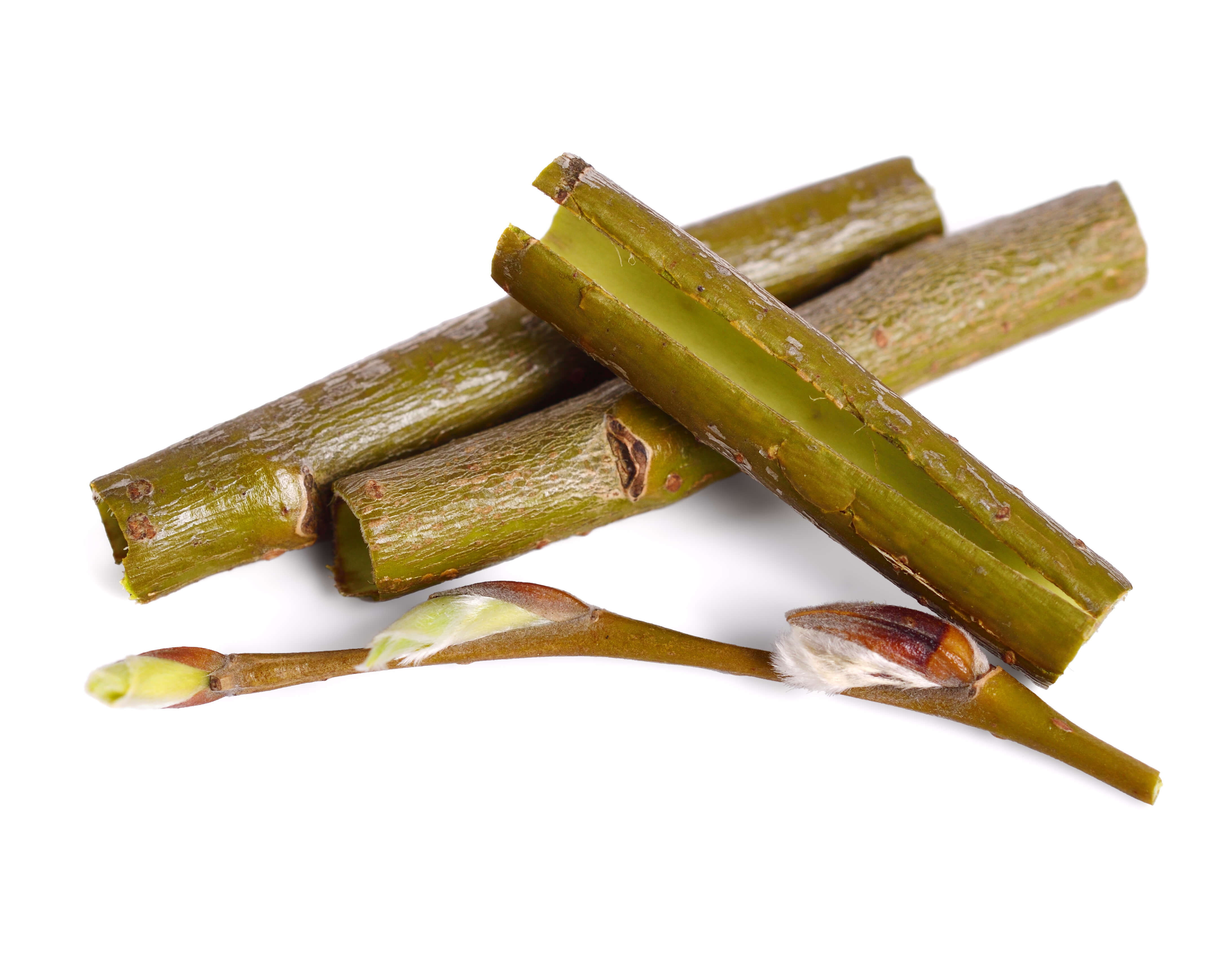
Natural salicylates are derived from willow bark extract, most commonly Salix alba or Salix nigra bark extract. Willow bark contains salicin, a natural precursor associated with salicylic-acid-like activity, but its action is more gradual and biologically moderated. This is what makes willow bark extract different from synthetic salicylic acid. It does not act only as a direct keratolytic agent, but as a broader botanical system containing natural salicylates, polyphenols, and tannins.
Why natural salicylates matter for modern skin
In healthy skin exfoliation is a natural, continuous process. Dead cells are regularly shed from the surface, allowing newer, more functional cells to emerge. However, this process can slow down due to age, stress, environmental exposure, excess sebum, or barrier imbalance.
When cell turnover becomes less efficient, the skin may appear dull, uneven, rough, or congested. Pores can become more visible, blemishes may be more likely to form, and active ingredients may not interact with the skin as effectively.
Natural salicylates help address this by supporting a smoother renewal process. The goal is gradual normalization of skin texture, tone, and clarity.
How natural salicylates differ from synthetic salicylic acid
Natural salicylates are particularly useful for skin that needs clarity, but cannot tolerate aggressive correction. Synthetic salicylic acid is known mainly for its strong keratolytic action. It can be highly effective, especially for oily or acne-prone skin, but it may also be too intense for sensitive, reactive, or barrier-impaired skin when used too frequently.
Natural salicylates from willow bark act differently. Their activity is delivered within a botanical matrix that also contains antioxidant and soothing compounds. This gives them a broader and more skin-compatible profile:
- synthetic salicylic acid primarily supports direct exfoliation,
- natural salicylates support exfoliation, antioxidant protection, inflammatory balance, and skin comfort.
For congested and blemish-prone skin
Natural salicylates are especially relevant for:
- skin prone to clogged pores,
- excess sebum,
- blemishes.
By supporting gentle exfoliation and helping prevent the accumulation of dead cells, they contribute to clearer-looking pores and smoother texture.
Their antimicrobial and microbiome-supporting properties also make them valuable in formulas designed for problem-prone skin.
For sensitive and reactive skin
One of the key benefits of natural salicylates is their compatibility with sensitive skin. Because their activity is more gradual, they are less likely to push the skin into a cycle of irritation, dryness, and recovery.
This makes them suitable for people who want the benefits of exfoliation but often react poorly to stronger acids. When properly formulated, natural salicylates can support renewal while helping maintain skin comfort and barrier stability.
For dullness, uneven texture and early aging signs
Slower cell turnover can make the skin look tired, rough, and less radiant. Natural salicylates help:
- refine surface texture,
- improve luminosity by encouraging a more consistent renewal process.
Their antioxidant profile is especially important here. Exfoliation can sometimes make already stressed skin more vulnerable to oxidative damage. Willow bark extract helps support the skin during renewal, making the process feel more protected and balanced.
How to use natural salicylates
Natural salicylates work best as part of a consistent, gentle routine rather than as an intensive treatment.
- Use 1–3 times per week, depending on the formulation and skin tolerance.
- Start gradually if the skin is sensitive or reactive.
- Pair with hydrating and barrier-supporting skincare.
- Avoid over-layering with several strong exfoliating acids in the same routine.
The goal is steady improvement in smoothness, clarity, comfort, and resilience.
A smart active pairing
Natural salicylates can work especially well together with azelaic acid. The two pathways complement each other:
- natural salicylates support exfoliation, pore clarity, antioxidant protection, and microbiome balance,
- azelaic acid supports inflammation control, sebum regulation, redness reduction, and pigmentation balance.
- Together they create a system of renewal plus regulation. This helps improve clarity and tone while maintaining skin stability.
Key takeaways
Natural salicylates offer a gentler, more balanced approach to exfoliation. They support:
- controlled renewal without aggressive peeling,
- clearer pores and reduced congestion,
- calmer-looking skin through anti-inflammatory support,
- antioxidant protection during the renewal process,
- better skin balance when combined with azelaic acid.
Instead of stripping the skin, natural salicylates help guide it toward smoother texture, clearer tone, and long-term comfort.