
What Does Your Skin Really Need During the Cold Season? Why Hydration Alone Isn’t Enough.
Cold weather and indoor heating can leave skin feeling dry, tight and more sensitive than usual. The natural response is to reach for a more hydrating product, but adding moisture doesn't necessarily solve the problem.
Skin also needs to be able to retain water. This depends largely on the condition of its protective barrier, particularly the lipids that help limit transepidermal water loss (TEWL).
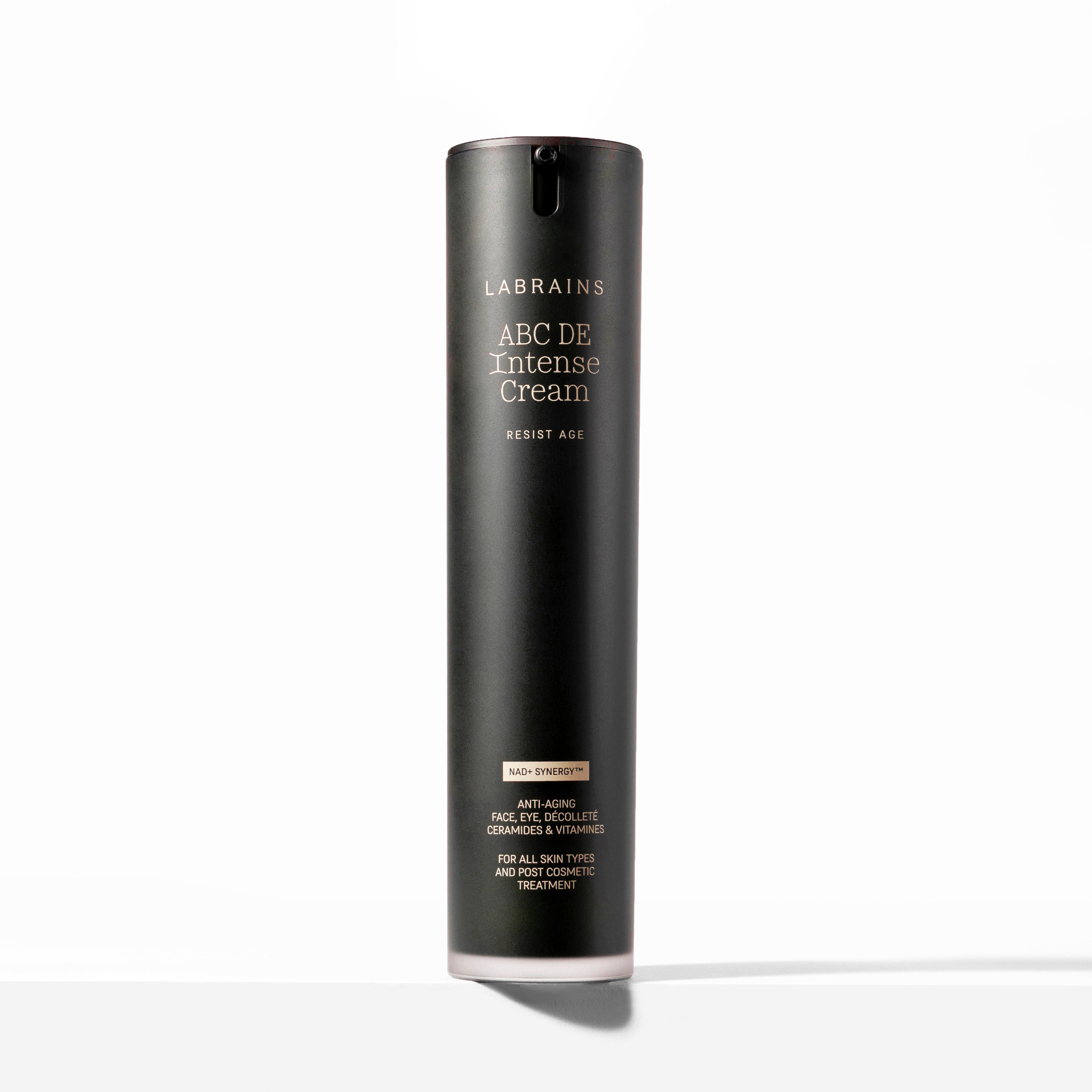
An effective cold-season skincare routine should therefore do more than replenish moisture. It should also help the skin retain it, support the lipid barrier and provide antioxidant protection. These principles are central to the formulation of LABRAINS ABC DE Intense Cream.
Cold-Season Skincare at a Glance
Why skin feels drier: cold outdoor conditions, low humidity and indoor heating can contribute to dryness, tightness and increased sensitivity.
Why hydration may not be enough: humectants help attract water, but the skin's lipid barrier plays an essential role in preventing excessive moisture loss.
What helps: a combination of hydrating ingredients, barrier-supporting lipids, antioxidants and ingredients that support normal skin function.
The ABC DE Intense Cream approach: 5% panthenol supports hydration; Ceramide NP and squalane support the lipid barrier; niacinamide supports epidermal lipid synthesis and acts as a precursor in NAD⁺ metabolism; while bakuchiol, raspberry ketone and vitamin derivatives contribute antioxidant support.
Why Does Winter Weather Cause Dry Skin and Increased TEWL?
During winter, skin is constantly exposed to changing conditions, from cold outdoor air to warm indoor spaces. Heating often reduces indoor relative humidity, making it easier for skin to lose moisture.
This process is closely linked to transepidermal water loss (TEWL), the natural movement of water through the epidermis into the surrounding environment.
A healthy skin barrier helps keep this water loss under control.
The outermost layer of the skin consists of corneocytes surrounded by a lipid matrix containing ceramides, cholesterol and fatty acids. These lipids form an organised structure that helps retain moisture and protect the skin from external irritants.
When this barrier is weakened, more water can escape, leaving skin feeling dry or tight even when hydrating products are used regularly.
What Does Your Skin Barrier Need Besides Moisture?
Keeping skin healthy during the colder months involves several closely related processes. Hydration helps maintain moisture levels in the epidermis, while the skin's lipid barrier helps prevent excessive water loss. Antioxidants help protect against oxidative stress, and normal cellular metabolism provides the energy needed for skin renewal, lipid synthesis and repair.
These functions are closely connected. Skin cells need energy to produce lipids and other components of the protective barrier. In turn, a healthy barrier helps retain moisture and protect the skin from external stressors.
One molecule plays a particularly important role in cellular energy metabolism: NAD⁺.
What Is NAD⁺ and Why Is It Important for Skin?
NAD⁺ is a coenzyme that cells require for energy metabolism, redox reactions, DNA repair and cellular stress responses.
Its full name is nicotinamide adenine dinucleotide, and skin cells continuously synthesise, consume and replenish it as part of normal cellular activity.
Environmental factors including UV radiation, pollution and oxidative stress can contribute to cellular and DNA damage. In response, cells activate protective mechanisms, including PARP enzymes involved in DNA damage responses. These processes consume NAD⁺.
Niacinamide, a form of vitamin B3, is one of the precursors cells use to synthesise NAD⁺. It also supports the production of ceramides and other epidermal lipids that help maintain the skin's protective barrier.
Niacinamide therefore has a role in both normal cellular metabolism and skin-barrier function.
LABRAINS ABC DE Intense Cream combines niacinamide with antioxidant and barrier-supporting ingredients. However, the product has not been clinically tested for its effect on cellular NAD⁺ levels.
What Ingredients Support Skin During the Cold Season?
ABC DE Intense Cream brings together ingredients that help maintain hydration, support the skin's protective barrier and provide antioxidant protection.
Ingredient |
Biological role |
Relevance to cold-season skin |
|
Vitamin B3 – Niacinamide |
NAD⁺ precursor; supports epidermal lipid synthesis |
Supports the skin barrier and natural moisture retention |
|
5% Provitamin B5 – Panthenol |
Humectant; supports barrier recovery |
Helps attract and retain water and relieve dryness-related discomfort |
|
Vitamin B12 – Cyanocobalamin |
Studied in relation to inflammatory signalling |
Complements the care of sensitive and environmentally stressed skin |
|
1% Bakuchiol |
Studied for visible skin ageing, oxidative stress and extracellular-matrix processes |
Combines healthy skin ageing care with a tolerance-focused formulation |
|
Ceramide NP + Squalane |
Support the skin’s lipid environment |
Help maintain barrier function and moisture retention |
|
Raspberry Ketone |
Antioxidant and multifunctional formulation ingredient |
Contributes antioxidant potential and to the formula’s protective system |
The table summarises findings from research on individual ingredients. These findings do not, on their own, demonstrate the clinical efficacy of the finished ABC DE Intense Cream formula.