Skip to content

Cart

Your cart is empty

Rosacea Skin Care Routine: 4 Steps to Calm Red, Sensitive Skin

Rosacea-prone skin is often described by what we see first: redness, flushing, visible sensitivity. But in practice, the issue goes deeper. Skin that reacts easily is usually skin that has lost tolerance. It struggles to retain water, preserve lipid balance, and stay calm under everyday triggers.

An effective rosacea skin care routine is about reducing what keeps the skin unstable and rebuilding the conditions in which it can function more normally again.

Below is a clear, dermatologist-aligned routine designed to do exactly that.

Why rosacea-prone skin becomes reactive

Red, sensitive skin is often linked to two overlapping problems:

  • disrupted skin barrier, often associated with lipid imbalance
  • insufficient hydration caused by impaired water retention

When these are out of balance, skin becomes easier to trigger and slower to recover. Heat, wind, stress, cleansing, and even well-meaning skincare can suddenly feel overwhelming.

This is why redness should not be treated in isolation. It is usually part of a broader pattern: barrier instability, dehydration, and increased sensitivity working together.

The key mistake in most rosacea routines

Most routines fail because of wrong system. A common pattern is using active-heavy products combined with over-cleansing or stripping formulas. This creates a cycle where the routine keeps disrupting the skin and the serum tries to repair it.

The result is partial, unstable improvement.

The priority should always be:

  1. stop ongoing irritation
  2. restore balance
  3. then support the skin with targeted products
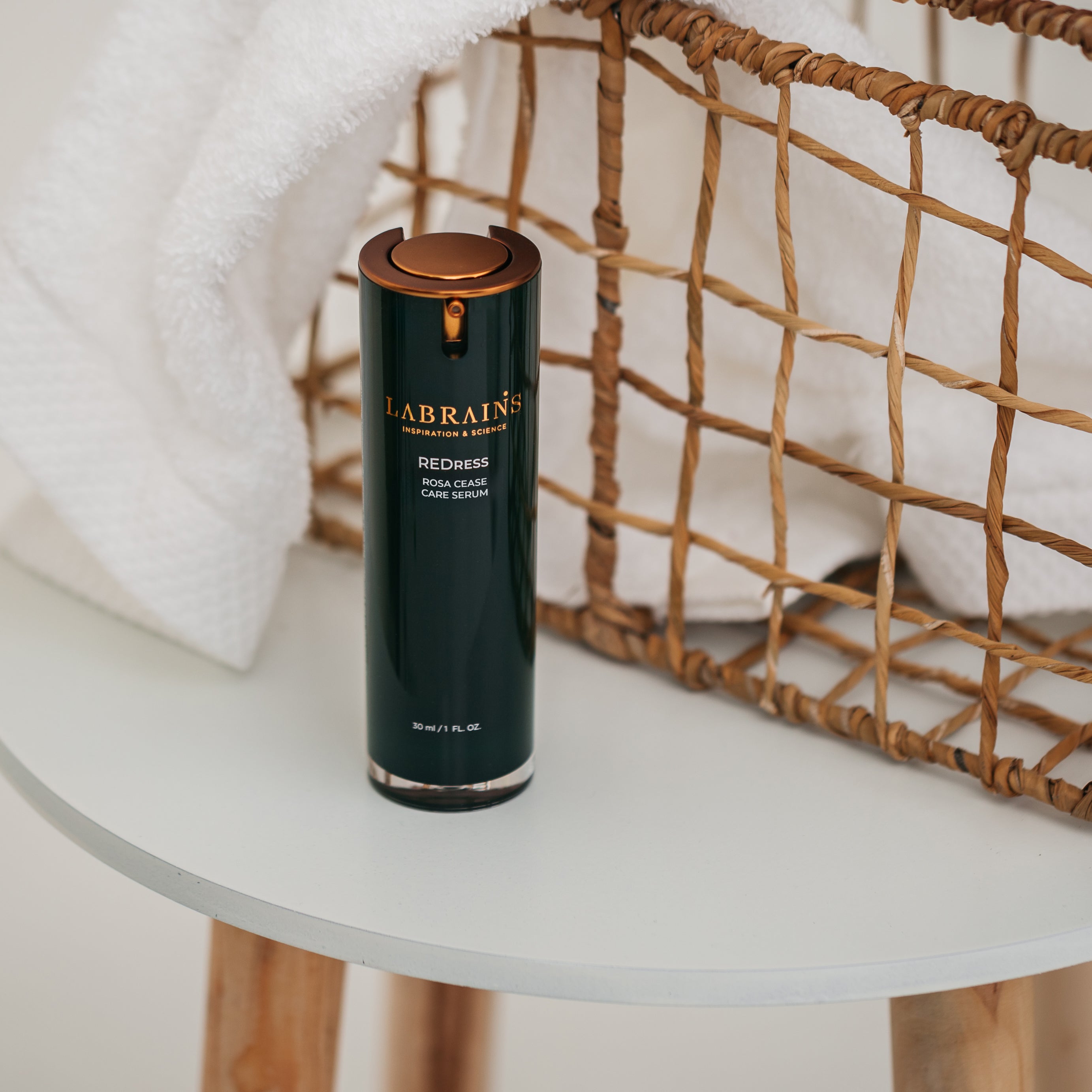
labrains rosa cease care serum, green serum on hands

Step 1: Cleanse without stripping

Cleansing is one of the most decisive steps.

For rosacea-prone or red, sensitive skin:

  • avoid foaming, aggressive, or fragranced cleansers,
  • avoid scrubbing or mechanical tools,
  • cleanse gently with fingertips.

The goal is simple: remove impurities without disturbing the lipid environment.

If your skin feels tight, squeaky, or dry after cleansing, the barrier is likely being compromised.

All LABRAINS cleansers are designed for sensitive skin and cleanse without stripping. This helps reduce daily stress on the skin and allows the rest of your routine to work effectively. For best results, we recommend double cleansing by combining a gel with a cleansing cream, or using one of them alongside micellar water in the morning. If you need help choosing, feel free to ask our team.

Step 2: Use a calming, hydrating serum

Once cleansing is corrected, a serum becomes highly effective.

For redness-prone skin, the role of a serum is to support it across essential needs:

  • hydration → improves comfort and reduces tightness
  • visible calming → softens redness background
  • antioxidant support → helps skin cope with daily stress
  • resilience → improves tolerance over time

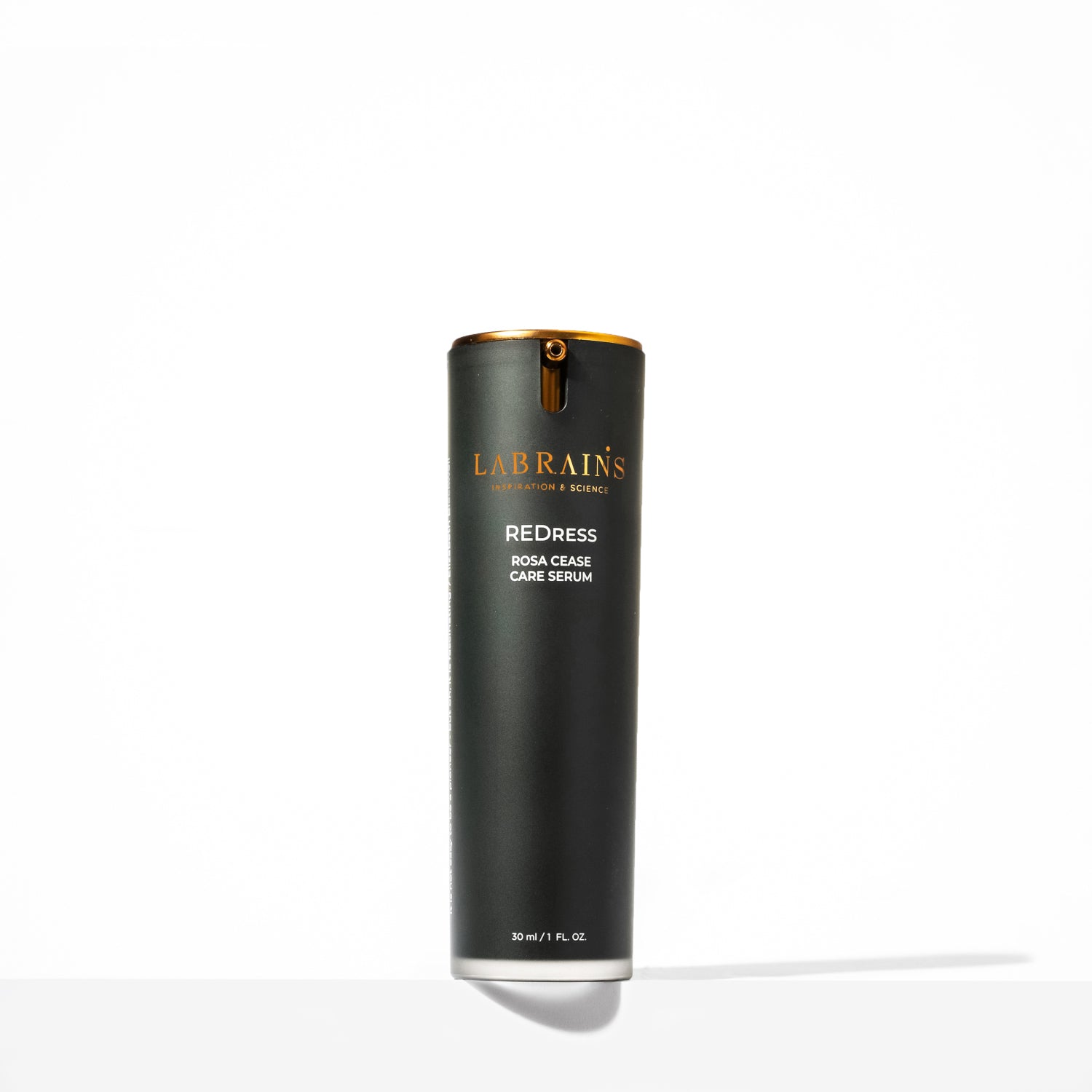
This is where LABRAINS Rosa Cease Serum fits naturally within the routine.

Why Rosa Cease Serum works for reactive skin

The formula is built as a multi-level support system:

  • Hyaluronic acid (multi-weight) → supports hydration at different skin levels
  • Biomimetic Blue Exosomes (Phormidium persicinum) → antioxidant and protective signaling support
  • Curcuma Longa biotechnology → supports skin under stress and reactivity
  • Schisandra Chinensis extract → enhances compatibility with sensitive skin
  • Date seed extract → helps improve overall skin tone and reduce visible fatigue

Just as importantly, the formula follows a non-irritating preservation philosophy, which is critical for skin that reacts easily. This matters because reactive skin does not respond only to hero actives. It responds to the whole formula architecture.

The result is a more intelligent outcome: skin that feels calmer, more hydrated, and more stable over time.

Step 3: Restore comfort with moisturizer

A serum alone is not enough. Moisturizer plays a crucial role in:

  • reducing water loss;
  • supporting lipid balance. In rosacea, there is strong scientific evidence that the lipid layer often contains an improper ratio of natural lipids of different chain lengths. Therefore, relying solely on synthetic emollients may worsen this imbalance over time and reduce the skin’s tolerance.
  • maintaining comfort throughout the day.

Without this step, hydration remains temporary.

For rosacea-prone skin, choose a moisturizer that:

  • supports the skin barrier,
  • avoids unnecessary irritation, especially from traditional preservatives ans synthetic emulssifiers,
  • helps maintain a stable, comfortable environment.

This is what turns hydration into lasting tolerance. Almost all LABRAINS moisturisers, except ABC Deep Nourishing Cream and Night Restoration Architect Cream, are also suitable for rosacea-affected skin. Choose based on the skin’s appearance:

If rosacea is well controlled, you can opt for anti-ageing options such as Renovation Sculptor, ABC de Intense, or Proasis Intense Cream.

Step 4: Protect from daily triggers

Even the best routine cannot succeed without protection.

Common rosacea triggers include:

  • UV exposure,
  • heat and temperature changes,
  • wind and friction,
  • over-manipulation of the skin.

Daily sun protection is essential. Mineral sunscreens such as zinc oxide and titanium dioxide are often better tolerated by sensitive skin types.

Protection is a part of the treatment strategy. Therefore, we developed the LABRAINS BB Cream, incorporating different molecular weights of hyaluronic acid, combined with ceramides, squalane, and other essential oils for sensitized skin. It also provides a blurring effect to soften the appearance of fine lines, along with SPF 15 protection (up to 93% protection) against UVA, UVB, and blue light.

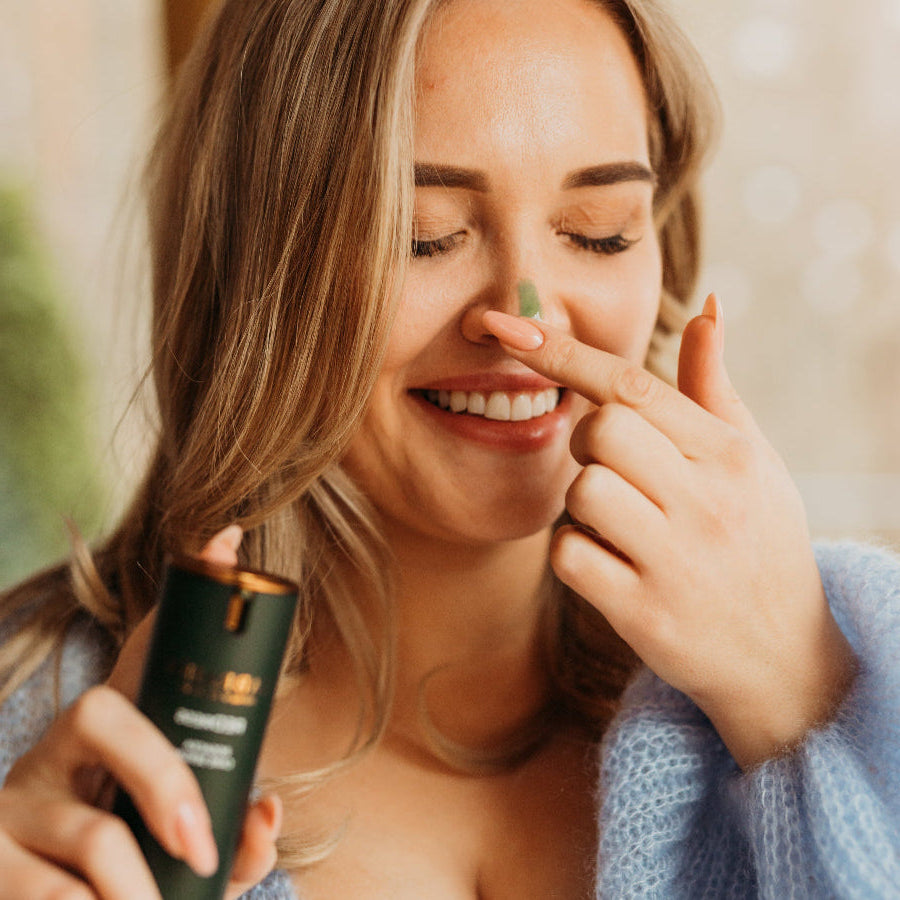
Smiling woman holding LABRAINS Rosa Cease Care Serum and applying green serum to her nose

Why hydration and lipids matter more than you think

Redness-prone skin is often both dehydrated and lipid-deficient.

These two factors reinforce each other:

  • when lipids are disrupted → water escapes more easily
  • when skin lacks water → sensitivity increases

This creates a loop of instability.

Breaking that loop requires:

  • gentle cleansing,
  • consistent hydration,
  • lipid-supportive care.

When these are in place, skin begins to behave more predictably and more comfortably.

Why antioxidants are essential in rosacea care

Reactive skin is often exposed to oxidative stress from UV, pollution, and internal stress-related factors.

This matters because oxidative stress can:

  • prolong redness,
  • increase sensitivity,
  • accelerate visible fatigue and early ageing.

That is why a modern rosacea routine should include antioxidant support, not just calming ingredients.

In Rosa Cease Serum, antioxidant logic is integrated into the formula not as the core function.

It is also important to say clearly: rosacea-prone skin should not be excluded from anti-ageing care. It simply needs anti-ageing support that is compatible, non-aggressive, and respectful of skin tolerance.

How to choose the right serum for rosacea-prone skin

When selecting a serum, focus on compatibility, not intensity.

Look for:

  • hydration support, such as hyaluronic acid,
  • calming, non-irritating ingredients,
  • antioxidant protection formulas designed for sensitive skin.

Avoid:

  • overly aggressive actives,
  • heavily fragranced formulas,
  • complex routines that increase irritation risk.

The goal is to reduce noise and restore balance.

Key takeaway: simplicity creates stability

The most effective rosacea skin care routine is structured, consistent, and respectful of the skin’s limits:

  1. gentle cleansing that does not strip,
  2. calming serum that supports hydration and resilience,
  3. moisturizer that maintains comfort,
  4. daily protection against triggers.

Within this system, products like Rosa Cease Serum become significantly more effective because they are no longer compensating for ongoing damage.

Final thought: less aggression, better results

The most advanced approach to rosacea-prone skin is not to treat it harder, but to destabilize it less.

When you:

  • stop disrupting the skin barrier,
  • support hydration properly,
  • introduce antioxidant care,
  • choose compatible formulations,

you create the conditions in which improvement becomes not only visible, but stable.

And that is the real goal of a well-designed routine.