Skip to content

Cart

Your cart is empty

What Is Skin Autophagy and Why Does It Matter for Skin Ageing?

Skin autophagy is part of the cells’ natural clean-up and recycling system, helping break down damaged or unnecessary cellular components and maintain healthy cell function. Long before visible signs of skin ageing, such as fine lines, appear on the surface, this and other processes involved in cellular renewal, barrier function and resilience are already changing.

Autophagy is not the only biological process involved in skin ageing, but it plays an important role in cellular quality control and renewal. Understanding how it works, how it changes with age and how skincare may support the skin’s natural renewal mechanisms offers a deeper perspective on healthy skin ageing.

What Is Autophagy in the Skin?

Every skin cell contains mechanisms that identify, break down and recycle damaged proteins and worn-out cellular components. Autophagy is part of this cellular quality-control system, helping cells remove material they no longer need while recovering components that can be reused.

In the skin, autophagy contributes to cellular maintenance and healthy function and is involved in processes that support epidermal renewal. However, autophagy is not the same as skin-cell turnover. Cell turnover describes the broader process through which new skin cells are formed, mature and eventually replace older cells at the surface, while autophagy takes place within individual cells, helping them maintain their internal quality and function.

This distinction matters because healthy-looking skin depends on more than how quickly surface cells are replaced. Cellular maintenance, barrier lipids, moisture retention, inflammatory processes, UV exposure, hormones and lifestyle all influence how the skin functions and appears over time. Autophagy should therefore be understood as one part of a much broader biological system involved in maintaining healthy skin.

What Happens to Skin Autophagy as We Age?

As we age, several processes involved in cellular maintenance, repair and renewal may become less efficient, and autophagy is one of them. Autophagy does not simply stop with age, but changes in its activity may affect how efficiently skin cells manage damaged or unnecessary cellular components and respond to everyday stress.

These age-related changes occur alongside slower epidermal renewal, changes in barrier function and reduced resilience to environmental and oxidative stress. As a result, the skin may become more prone to dryness, roughness, sensitivity and a slower recovery from external stressors.

The goal of healthy skin ageing is therefore not to “restart” autophagy, but to support the skin’s natural cellular maintenance and renewal mechanisms while maintaining the conditions they need to function effectively. Autophagy is one part of this interconnected system, alongside barrier integrity, hydration, lipid balance and protection from environmental stress.

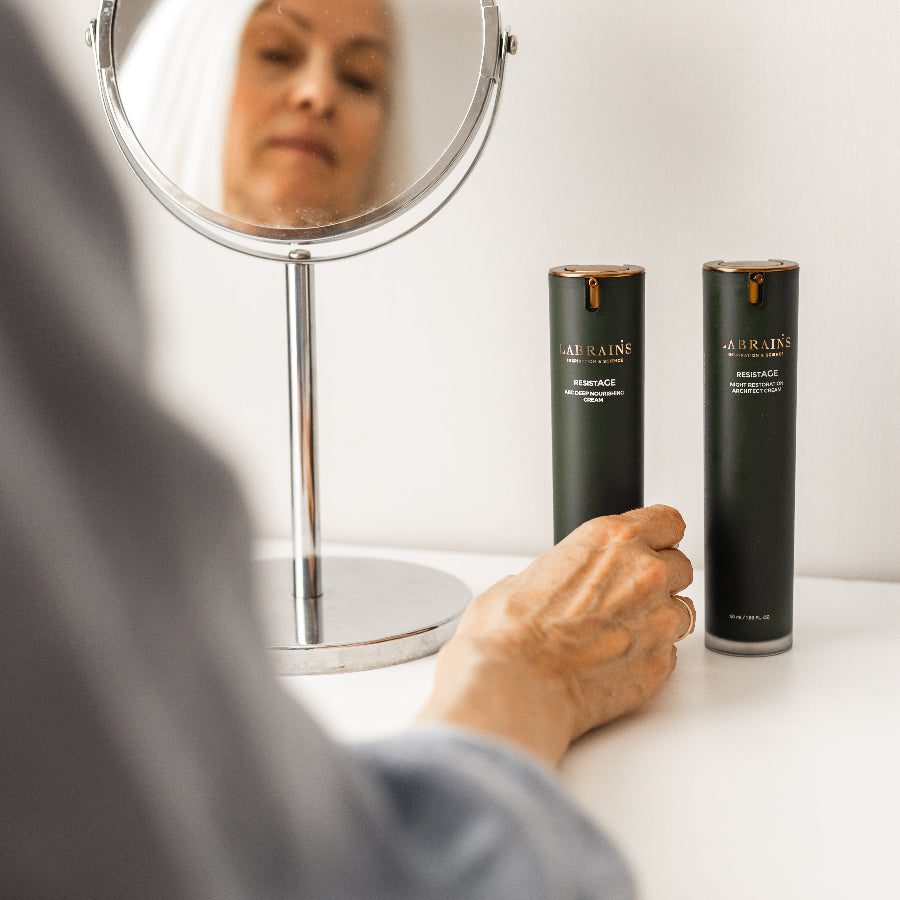
Woman looking in a mirror with two labrains resistage skincare products on a table.

What Does Slower Skin Renewal Look Like?

When the processes involved in skin renewal become less efficient, the changes may gradually become visible and noticeable. Skin may feel rougher or less smooth, appear duller or more uneven, and become persistently dry despite regular moisturising. It may also become more sensitive to changes in weather, friction or skincare products and take longer to regain comfort after exposure to everyday stressors.

For dry, sensitive or reactive skin, simply adding more surface hydration may therefore not be enough. Supporting healthy skin renewal also means maintaining the protective barrier, replenishing essential skin lipids and creating favourable conditions for the skin’s natural cellular maintenance and renewal processes.

Can Skincare Support Skin Autophagy and Cellular Renewal?

Autophagy is an internal biological process, and skincare cannot simply “restart” or control it. However, modern skincare research is increasingly exploring active ingredients that may interact with cellular signalling pathways involved in renewal, stress response and other maintenance processes within the skin.

Supporting healthy skin renewal also extends beyond targeting a single cellular mechanism. The skin needs a well-functioning protective barrier, sufficient hydration and an appropriate balance of lipids to maintain its natural functions and resilience. For dry, sensitive or ageing skin in particular, supporting these conditions can be just as important as selecting targeted active ingredients.

This is why the effectiveness of a skincare formula should not be considered through one “hero” ingredient alone. The combination of active ingredients, barrier-supporting components and the overall formulation determines how well a product supports the skin while remaining suitable for its specific needs.

How Does Neurocosmetics Relate to Skin Renewal?

Neurocosmetics is an emerging area of skincare research that explores the communication between the skin, its cells and signalling mechanisms involved in processes such as sensitivity, stress response and skin homeostasis. This becomes relevant when looking at skin renewal because cellular maintenance, barrier function, sensitivity and resilience do not operate independently, but are influenced by interconnected biological signalling mechanisms.

Rather than focusing only on visible concerns at the skin’s surface, neurocosmetic approaches consider how cosmetic active ingredients may interact with the signalling pathways involved in how the skin responds and adapts. This creates a broader approach to healthy skin ageing: supporting not only visible skin condition, but also the biological processes associated with maintaining healthy skin function.

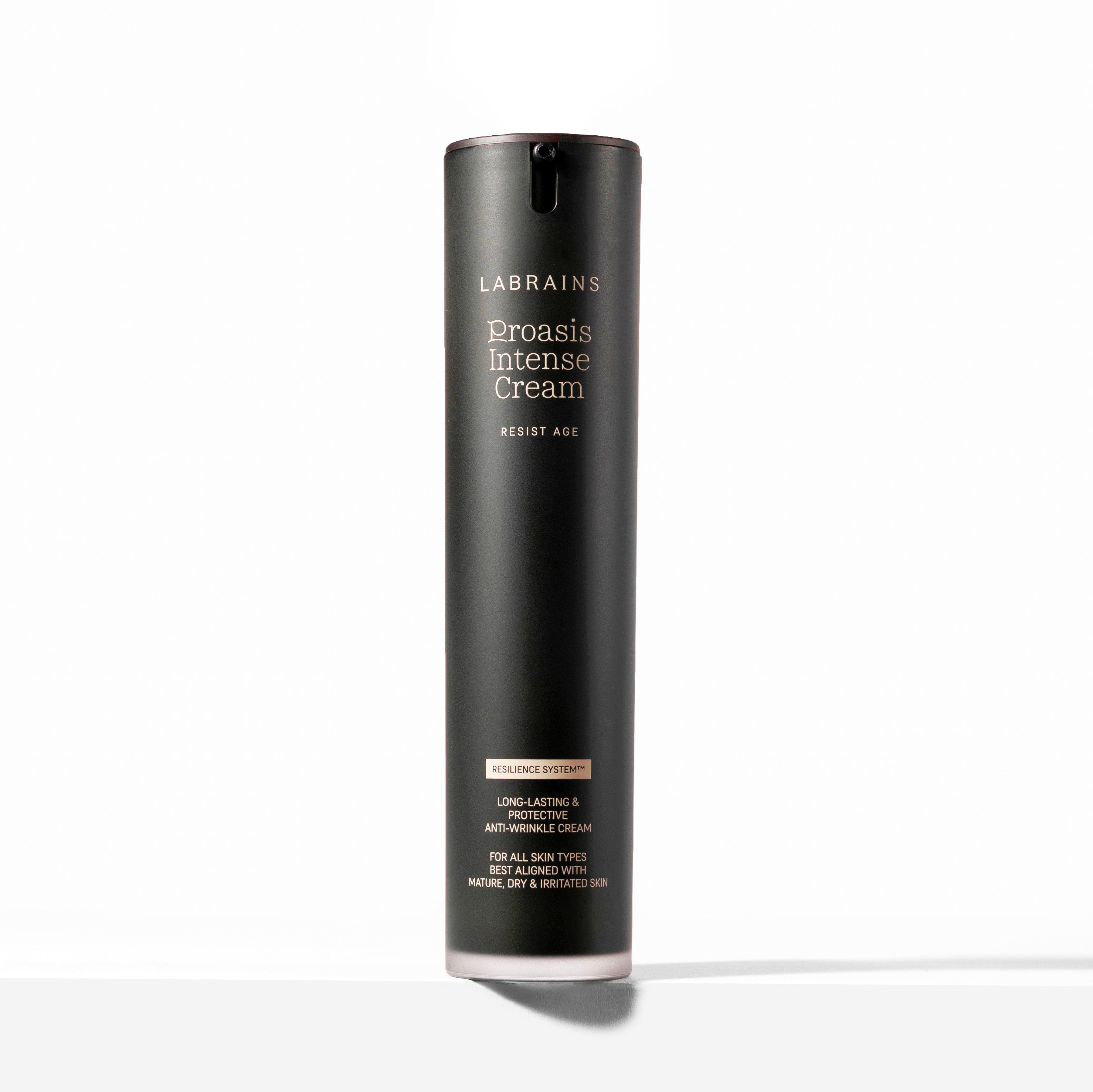
In LABRAINS formulas, this means combining targeted active ingredients with barrier-supporting, moisturising and soothing components rather than relying on a single biological mechanism. In Proasis Intense Cream, this approach brings together ingredients selected for processes associated with cellular renewal and autophagy with ingredients that support the skin barrier, hydration and comfort.

The Science Behind LABRAINS Proasis Intense

LABRAINS Proasis Intense Cream was developed as a practical application of this approach to healthy skin ageing. Rather than targeting a single visible concern or biological process, the formula combines active ingredients selected to support cellular renewal with ingredients that help maintain the skin barrier, replenish essential lipids, provide lasting hydration and soothe dry, sensitive or reactive skin.

This multi-level approach reflects the interconnected nature of healthy skin function: cellular renewal depends on more than one pathway, just as skin resilience depends on more than hydration alone. The following components of the formula address different but complementary aspects of skin renewal, barrier function and comfort.

Supporting Autophagy and Cellular Renewal

At the core of Proasis Intense Cream are two targeted peptides selected to support complementary processes involved in cellular maintenance and epidermal renewal.

Acetyl Tetrapeptide-2 is included for its interaction with mTOR, a key signalling pathway involved in regulating cellular growth, metabolism and autophagy. By interacting with this regulatory pathway, the peptide is intended to support cellular processes associated with autophagy and the skin’s natural mechanisms for maintaining cellular quality.

Fibroin Oligopeptide-4 complements this approach by supporting keratinocyte differentiation and epidermal renewal. Keratinocytes form the majority of the epidermis, and their continuous formation, maturation and differentiation are essential to maintaining a healthy skin surface and protective barrier.

Together, these two peptides address different but interconnected aspects of skin renewal: Acetyl Tetrapeptide-2 targets signalling associated with cellular maintenance and autophagy, while Fibroin Oligopeptide-4 supports the renewal and differentiation of epidermal cells. This dual approach connects cellular-level maintenance with the broader renewal processes that help skin remain resilient and function effectively over time.

Supporting the Skin Barrier During Renewal

Supporting cellular renewal is only one part of maintaining healthy skin function. As epidermal cells renew and mature, the skin also needs the structural lipids and moisture required to maintain an effective protective barrier. This is particularly important for dry, sensitive and ageing skin, where barrier function may already be compromised.

Proasis Intense Cream therefore combines its targeted peptides with ceramides, phytosterols and free fatty acids – key lipid components that help maintain the structure and integrity of the skin barrier. Avena sativa (oat) kernel extract provides additional naturally occurring lipids while helping support skin comfort.

Hydration is addressed with 5% fermented panthenol, a humectant that helps attract and retain moisture in the skin. Rather than treating hydration and barrier support as separate concerns, the formula brings together humectants and lipid components to help maintain both moisture and the structural conditions needed for a resilient skin barrier.

This combination complements the renewal-focused actives by supporting the skin at the surface as its natural maintenance and renewal processes continue within.

Soothing Sensitive and Reactive Skin

Skin undergoing age-related changes in renewal and barrier function may also become more sensitive to environmental stressors and everyday irritation. Proasis Intense Cream therefore combines its renewal- and barrier-supporting ingredients with targeted soothing actives selected to help maintain comfort and reduce visible signs of reactivity.

Magnesium Carboxymethyl Beta-Glucan helps soothe sensitive, itchy skin and is associated with supporting a balanced immune response and reducing microbial adhesion to compromised areas. Helichrysum italicum extract complements this action by supporting the formation of endorphin-like molecules associated with a soothing response in the skin.

The formula also contains asiaticoside, a bioactive compound derived from Centella asiatica, which is associated with reducing pro-inflammatory activity while supporting collagen synthesis. Together, these ingredients address different aspects of sensitivity and skin comfort while complementing the formula’s broader focus on barrier function and renewal.

This approach has also been evaluated in an independent HAMILTON laboratory dermatological use test involving participants with mild to moderate skin irritation. In this participant group, 100% reported the disappearance of redness and sensitivity.

Why the Complete Formula Matters

Targeted active ingredients are only one part of an effective skincare formula. Their performance also depends on the environment created by the complete formulation – including its pH, lipid composition, hydration system, texture and overall suitability for the skin it is designed to support.

Proasis Intense Cream has a pH of 5.0, close to the skin’s naturally acidic environment. Maintaining a skin-compatible pH is particularly relevant for dry, sensitive and reactive skin, where supporting barrier function and minimising unnecessary sources of irritation are important considerations.

The formula also takes a considered approach to its sensory and film-forming system. Maltol, a naturally derived sugar-related compound, contributes to formula stability while giving the cream its subtle, naturally sweet scent without added fragrance. Biotechnologically derived pine oils form an invisible, breathable layer on the skin, helping create a comfortable protective film without a heavy feel.

Taken together, these formulation choices complement the targeted peptides, barrier lipids, humectants and soothing ingredients discussed above. Proasis Intense Cream is therefore designed not around a single “hero” ingredient, but as a complete formula in which cellular renewal, barrier support, hydration and skin comfort are addressed together.

The Takeaway

Healthy skin ageing is not determined by a single process. Autophagy plays an important role in cellular maintenance and renewal, but it works within a much broader biological system that includes epidermal renewal, barrier function, lipid balance, hydration and the skin’s response to everyday stress.

This is also why supporting ageing, dry or sensitive skin requires more than targeting one visible concern or relying on a single “hero” ingredient. Proasis Intense Cream brings together peptides selected to support processes associated with autophagy and epidermal renewal with ceramides, essential lipids, 5% fermented panthenol and targeted soothing ingredients – all within a formula designed with sensitive and reactive skin in mind.

The result is an approach to healthy skin ageing that works with the skin rather than simply focusing on what is visible at the surface: supporting its natural renewal mechanisms, strengthening the conditions needed for a resilient barrier, and helping skin remain comfortable, balanced and better equipped to adapt over time.

Frequently Asked Questions